
Cheap Home Makeover Ideas: Redesign a Room Without a Big Budget
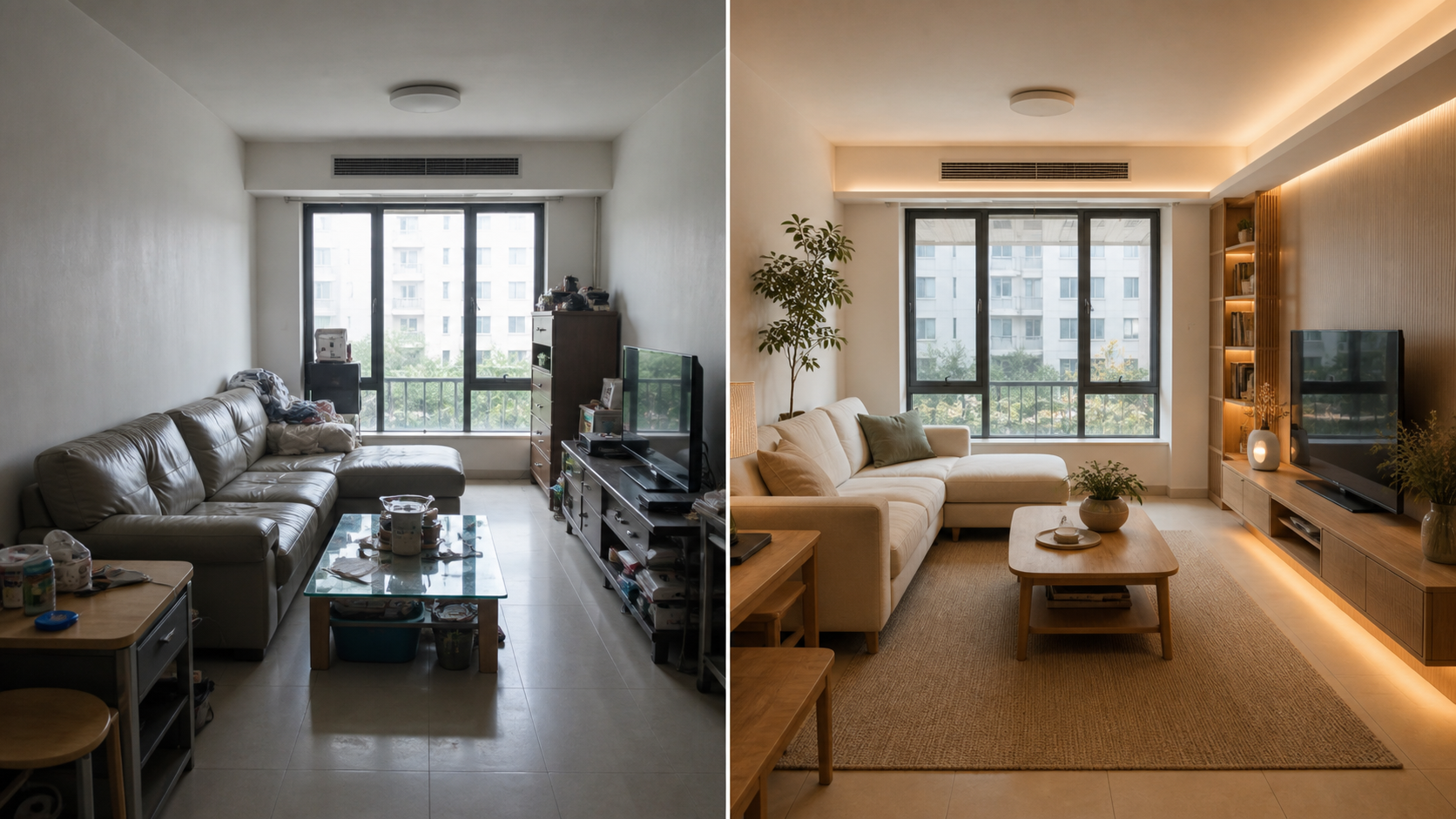
A cheap home makeover works best when you change the parts of a room that people notice first: layout, light, color, texture, storage, and one or two focal points. You do not need to replace everything. In most rooms, the fastest improvement comes from editing what is already there, then making a few targeted upgrades.
AI Home Design can help at the planning stage. Upload a room photo, try a few design directions, and compare makeover ideas before buying paint, furniture, curtains, or decor. Use the free AI room design generator for a 1K preview, then keep the ideas that actually fit your room.
Start with the room layout
Before spending money, move furniture. A better layout can make a room feel newer without buying anything.
Try these layout checks:
- Pull seating away from the wall if the room has enough depth.
- Keep a clear path from the door to the main seating or work area.
- Move the largest piece of furniture first, then arrange smaller pieces around it.
- Remove one item that blocks light, circulation, or a key view.
- Create a visible focal point, such as a sofa wall, bed wall, desk wall, or reading corner.
Take a quick photo after each layout change. Small rooms especially benefit from testing three or four arrangements before you decide.
Paint one high-impact area
Painting every wall can still be affordable, but the cheapest high-impact move is often one focused paint change.
Good budget options:
- Paint the wall behind a bed or sofa.
- Repaint old trim, doors, or cabinets.
- Use a warmer white instead of a cold gray-white.
- Add a soft neutral color to make mismatched furniture feel calmer.
- Paint a small alcove, shelf back, or desk nook.
If you are unsure, generate a few room redesign previews first. A modern warm minimal style may suggest ivory, taupe, clay, or soft beige. A dark modern direction may work with charcoal, walnut, or deep green. A Scandinavian direction may favor warm white and pale oak.
Upgrade lighting before furniture
Lighting is one of the cheapest ways to make a home makeover feel intentional. A room with one ceiling light often looks flat, even if the furniture is good.
Use three layers:
- Ambient light: the main room light.
- Task light: a lamp for reading, cooking, working, or getting ready.
- Accent light: a small lamp, wall light, shelf light, or picture light.
Warm bulbs usually make budget rooms feel more comfortable. In living rooms and bedrooms, start around 2700K to 3000K. In kitchens and bathrooms, slightly cleaner light can work, but avoid harsh blue-white bulbs unless the space needs it.
Use textiles to make old furniture feel new
Textiles are budget-friendly because they cover large visual areas. They also soften rooms that feel empty or unfinished.
Prioritize:
- Curtains that reach close to the floor.
- A rug large enough for the main furniture group.
- Pillow covers in two or three coordinated colors.
- A throw blanket with texture.
- New bedding or a simple bedspread.
Do not buy every textile in the same color. A cheap makeover looks more designed when the palette has contrast: light walls, medium wood, dark metal, warm fabric, or one muted accent color.
Declutter, then add closed storage
Many rooms look dated because visible clutter breaks the design, not because the furniture is wrong.
Start with:
- One tray for remotes, candles, or small objects.
- Baskets for toys, blankets, cables, or hobby items.
- Closed boxes on shelves.
- Hooks near the entry or bathroom.
- Under-bed containers in bedrooms.
Closed storage is usually better than adding more open shelves. Open shelves need styling. Closed storage hides the visual noise.
Change hardware and small fixtures
You can often refresh a room by replacing the parts people touch.
Low-cost swaps:
- Cabinet knobs and pulls.
- Outlet and switch covers.
- Curtain rods.
- Door handles.
- Lamp shades.
- Towel hooks and toilet paper holders.
Choose one finish family per room. Matte black, brushed nickel, brass, chrome, or bronze can all work, but mixing too many finishes can make a cheap makeover look accidental.
Create one focal wall
A focal wall helps a budget room feel planned. It gives the eye somewhere to land.
Ideas:
- Art above the sofa.
- A painted bed wall.
- A simple gallery wall.
- Floating shelves with a few large objects.
- A large mirror opposite a window.
- Peel-and-stick wallpaper in a small area.
If the room is small, keep the focal wall simple. One large piece often looks better than many tiny objects.
Try style directions before buying
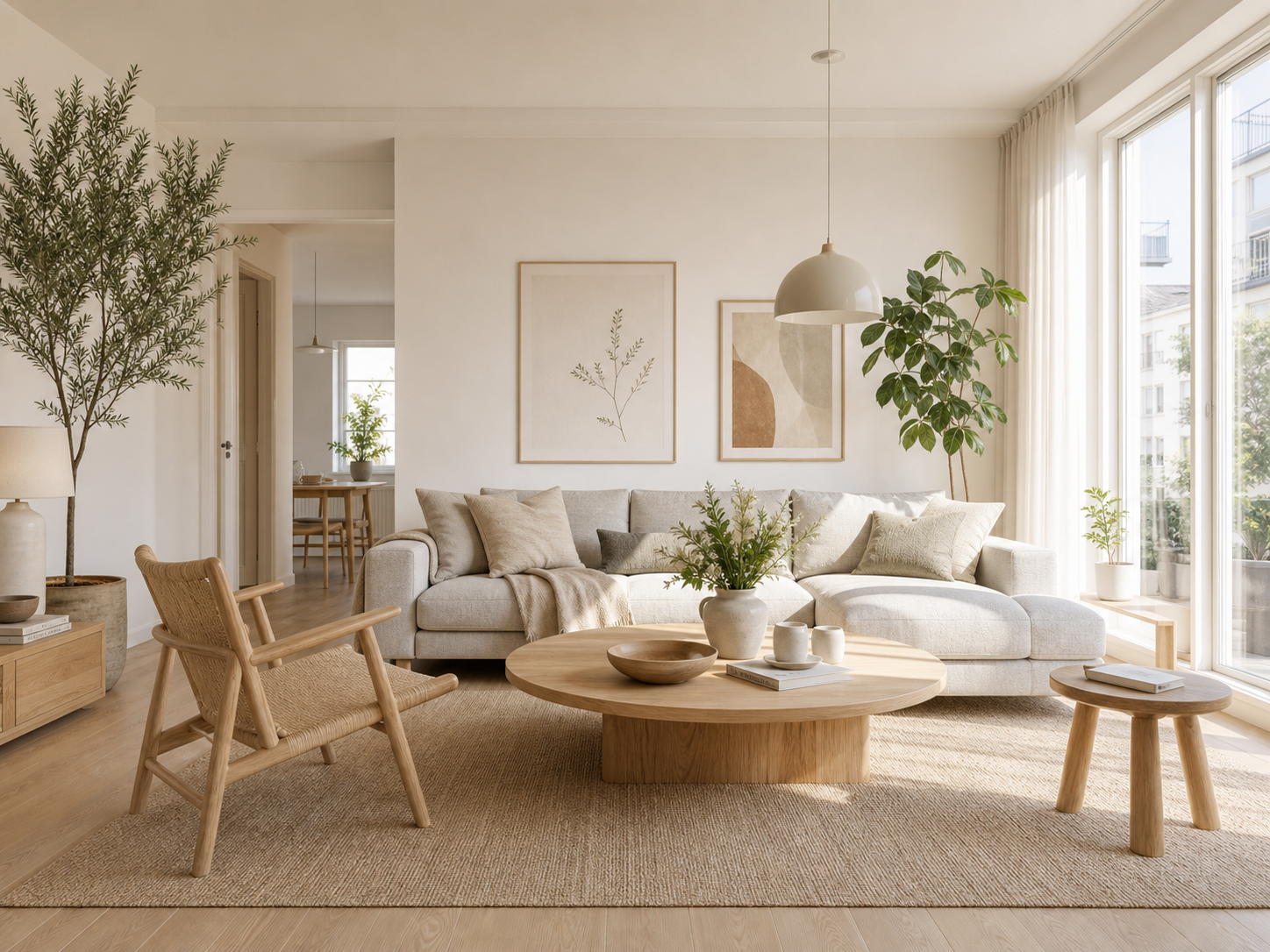
Cheap home makeover ideas become easier when you pick a style direction first. You do not have to follow a style perfectly, but it gives you a filter for what to buy and what to ignore.
Popular budget-friendly directions:
- Scandinavian: light walls, pale wood, simple textiles, soft contrast.
- Japandi: quiet colors, natural textures, low clutter, warm minimal furniture.
- Modern farmhouse: painted furniture, warm wood, simple black or brass accents.
- Coastal: soft blue, white, linen, light wood, relaxed texture.
- Organic modern: warm neutrals, curved shapes, stone, wood, and textured fabric.
Use the AI interior design styles section to compare these directions from a real room photo. This is more useful than saving inspiration images that do not match your room size, windows, or floor plan.
Cheap makeover ideas by room
Living room
- Rearrange seating around a clear conversation area.
- Add one larger rug instead of several small mats.
- Replace pillow covers and use two texture types.
- Hide cables and use a simple media basket.
- Add one floor lamp and one table lamp.
Bedroom
- Move the bed to the calmest wall.
- Add matching bedside lamps.
- Use a larger blanket or coverlet to hide mismatched bedding.
- Paint or style the wall behind the bed.
- Remove visible storage from the floor.
Kitchen
- Change cabinet handles.
- Add under-cabinet lighting.
- Use one clear counter zone for daily items.
- Add a washable runner.
- Repaint a small breakfast nook or pantry door.
Bathroom
- Replace towel hooks, mirror, or light fixture.
- Use matching towels and one accent color.
- Add closed storage for toiletries.
- Use peel-and-stick tile only in dry or suitable areas.
- Keep counters almost empty.
Use AI previews as a budget filter
The point of AI room design is not to buy everything in the picture. Use the preview to answer practical questions:
- Does a warmer wall color help?
- Should the room go lighter or darker?
- Does the existing floor work with the new style?
- Which furniture pieces should stay?
- Is one focal wall enough?
- Would curtains make the room feel taller?
If a preview looks good, copy the design logic rather than every object. Keep the layout, palette, lighting idea, and storage plan. Then buy only what supports those decisions.
Budget makeover checklist
Use this order to avoid overspending:
- Remove what the room does not need.
- Rearrange furniture and take photos.
- Pick one style direction.
- Test colors and layouts with an AI preview.
- Upgrade lighting.
- Add textiles.
- Add storage.
- Change small fixtures or hardware.
- Add one focal point.
- Review before buying more decor.
Related AI room design tools
Use these pages when the makeover needs a more focused preview:
- Virtual room redesign: upload a room photo and test a complete redesign direction.
- AI bedroom design generator: compare bedroom color, bedding, lighting, and decor ideas.
- Kitchen interior design AI: test cabinet color, backsplash, lighting, and material direction.
- Bathroom redesign AI: preview tile, vanity, mirror, storage, and lighting ideas.
FAQ
What is the cheapest way to makeover a room?
The cheapest approach is to rearrange furniture, declutter, improve lighting, and change textiles before buying large furniture. Paint and hardware changes can also create a big difference at low cost.
Can AI help with cheap home makeover ideas?
Yes. AI can show different colors, furniture layouts, and style directions from your own room photo. Use it as a planning tool before spending money on paint, decor, or furniture.
Should I copy an AI room design exactly?
No. Treat the image as a concept. Copy the palette, layout, lighting, and mood, then adapt the details to your budget, room measurements, and available products.
What should I avoid in a budget makeover?
Avoid buying many small decorations before solving layout, lighting, storage, and color. Small decor cannot fix a room that lacks structure.
Ready to compare ideas before you buy anything? Start with the free AI room design generator.